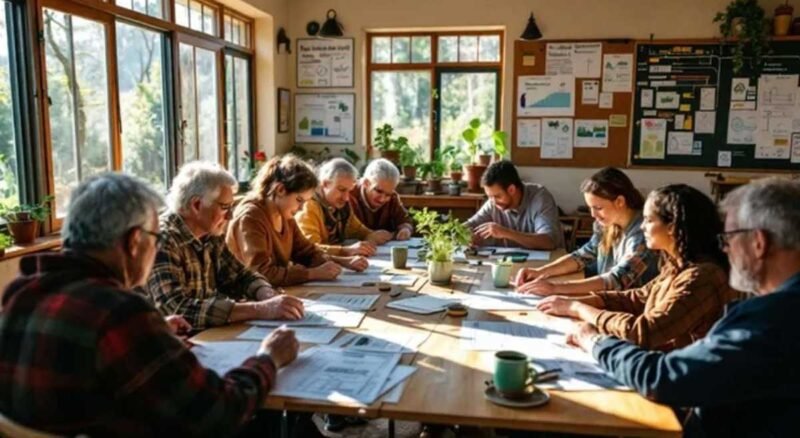
Big, sweeping solutions often grab headlines. National policies, global initiatives, and large-scale funding campaigns can all play an important role in addressing complex issues. But when it comes to creating meaningful, long-term change, the real momentum often begins much closer to home, at the community level.
Communities are where people live their daily lives. They are shaped by shared experiences, cultural values, and local challenges. Because of this, community-led change tends to be more relevant, more sustainable, and more impactful over time.
Local Understanding Drives Real Solutions
One of the biggest advantages of community-based change is local knowledge. People within a community understand their own needs better than anyone else. They know which problems are most urgent, which solutions are realistic, and what barriers exist.
For example, improving access to education in one area might require building schools, while in another, it could mean addressing transportation or cultural attitudes. When communities are involved in identifying these needs, solutions become more targeted and effective.
This kind of insight cannot always be replicated by external organizations alone. Lasting change requires listening, collaboration, and trust, all of which are rooted in community engagement.
Empowerment Creates Sustainability
When people are empowered to take part in shaping their own future, the impact lasts longer. Community-driven initiatives encourage ownership, which leads to greater commitment and accountability.
Rather than relying on short-term interventions, community members become active participants in maintaining progress. Whether it is supporting local education programs, improving healthcare access, or developing economic opportunities, the involvement of local people ensures that change continues even after outside support decreases.
This is where organizations like Compassion International play a valuable role, working alongside communities to support long-term development rather than temporary fixes.
Stronger Connections Build Resilience
Communities that work together are more resilient in the face of challenges. When people feel connected and supported, they are better equipped to handle economic shifts, natural disasters, or social changes.
Community-level initiatives often strengthen relationships between neighbors, local leaders, and organizations. These connections create a support network that helps individuals and families thrive, even during difficult times.
Resilience is not just about surviving challenges; it is about adapting and growing stronger through them. And that kind of strength is built collectively.
Small Changes Add Up
It is easy to underestimate the power of small, local actions. But when multiplied across neighborhoods, towns, and regions, these efforts create a significant impact.
A community garden can improve food security. A mentorship program can shape future leaders. A local business initiative can boost economic stability. Each of these changes may seem small on its own, but together, they form the foundation of a larger transformation.
A Bottom-Up Approach to Change
Lasting change is rarely imposed from the top down. Instead, it grows organically from the ground up. When communities are supported, empowered, and equipped with the right resources, they become the driving force behind progress.
By focusing on people, relationships, and local solutions, community-level change creates a ripple effect that extends far beyond its starting point. In a world that often looks for quick fixes, it is this steady, people-centered approach that truly stands the test of time.